Not His First Rodeo
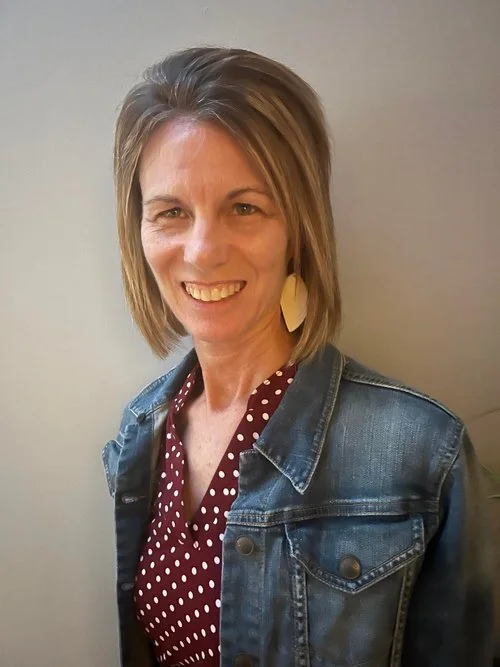
August 29, 2026 — Lisa Thacker
Being married to a football coach means the game becomes a major part of your life (and your family’s life, too)! When our son, Dalton, was born, the anticipation of him being part of the game was met with great excitement. Soon, he was woven into the landscape of the team long before he ever stepped on the field in a uniform. Water boy, manager, and film-watching-buddy with dad on Sundays all brought him pleasure. With the arrival of his high school freshman year in the fall of 2019, the waiting was over. And just like that, Dalton was officially part of the team!
Tragically, that long-awaited milestone would be short-lived. Dalton went to heaven the following spring.
My husband’s passion for the sport and God’s provision of strength gave him the courage to continue coaching. One Friday night after a satisfying win, my husband walked in the house, emotionally charged and ready to process the defining moments of the victory.
“We were down by three and eight yards from the goal line. I told my quarterback to run boot leg right,” he detailed. “Just run the play. It’ll work.”
“Would you believe he had the nerve to question my play calling? He balked but ran it anyway. And….we scored. When he came off the field wearing his eat-my-words kind of grin, all I could say was, ‘It worked didn’t it? You know, this ain’t my first rodeo.”
Before the words finished falling out of his mouth, I had already made the connection. It was as if I could hear God saying it directly to me in my anguish without Dalton. In my doubts that I would ever be okay, he was saying, Lisa, I’ve got this. Your grief is not my first rodeo.
The comfort here is that God’s ability and power aren’t threatened by our doubts, fears, and questions. Thank goodness! Unlike my husband’s reaction, God’s is far from miffed, appalled, or defensive. Better described, he gently invites us into his care: I’ve been taking care of my suffering children for thousands of years. I love you too much to stop now. You can trust me.
My questions sounded like Where are you, God? Will I feel like this forever? Will I ever be able to find strength and the will to move forward?
If you’re asking similar questions, it actually means you’re quite normal. In fact, you were designed to respond in such a way to painful situations. Psychology findings have helped us understand that, knowing the effects of a broken world, God wired us with three internal working models to help us balance the competing needs for intimacy and independence.
Are others available to me in my distress? (Where are you, God? Where did my friends go?)
Will my distress ever come to an end? (Will I feel like this forever?)
How do I use my agency amid my distress? (How do I regain purpose when I feel completely powerless in this world?)
By far, my biggest dilemma was whether the distress would ever end. There was no way I could live with such a heavy-weighted blanket of sorrow for the rest of my days. Perhaps you know this feeling all too well yourself.
As I noted earlier, neuroscience normalizes that our longing for relief was purposely encoded into our nervous system. Why? So we would pursue connection with God and his people, regain a sense of agency one day, and eventually allow God to use us to comfort and love others in their pain (purpose). Like the water, rock, and seasonal cycles of the earth, this Hope-Faith-Love Cycle of Christ (pain–connection–agency–purpose) has been at work since creation. We have faith that someone will show up for us in our distress, hope that the distress won’t last forever, and love for others as we use our agency to connect with others in their needs.
While restoration will never fully eliminate the lingering ache resulting from our child(ren)’s absence, God won’t let our suffering have the final say.
How do I know? Because the Bible is bursting with 66 books chronicling story after story of people the Lord rescued, redeemed, and restored in their circumstances.
Joseph was rescued from slavery and redeemed into leadership. Paul was rescued from spiritual blindness and redeemed into a widespread ministry still impacting believers today through scripture. The woman at the well was rescued from unhealthy relational patterns and redeemed to bring many to Christ.
On occasion, redemption is marked by epic events like rising to kingship (David), the saving of an entire race (Esther), or rescuing a starving nation from famine (Joseph). But those are rare. Most often, redemption happens quietly in the lives of ordinary people. Ministering to another bereaved parent in your church. Listening with empathy to a hurting friend over coffee. Volunteering at a homeless shelter on Thanksgiving. Or offering to care for a newly widowed mom’s young children.
Make no mistake, my suffering and your suffering are not God’s first rodeo. It may feel like it. You might believe you’re never coming out of the abyss of sorrow. Take heart. God is faithful. He was faithful to every one of his children in the Bible and your story won’t be any different.
Sometimes we have to intentionally look for evidence of God’s faithfulness. And when we find it, we should record it, creating a trail of his footprints.
We may not understand the play, control the outcome, or see what comes next, but we can choose to trust the coach. After all, this may be our first (or second, or third, or tenth) rodeo—but it certainly isn’t His.
I waited patiently for the Lord; he turned to me and heard my cry. He lifted me out of the slimy pit, out of the mud and mire; he set my feet on a rock and gave me a firm place to stand.He put a new song in my mouth, a hymn of praise to our God. Many will see and fear the Lord and put their trust in him. — Psalm 40:1-3
Source Note: Insights about the internal working models and other neuroscience principles were drawn from Landscapes of the Soul by Cyd and Geoff Holsclaw.